April 7, 2026
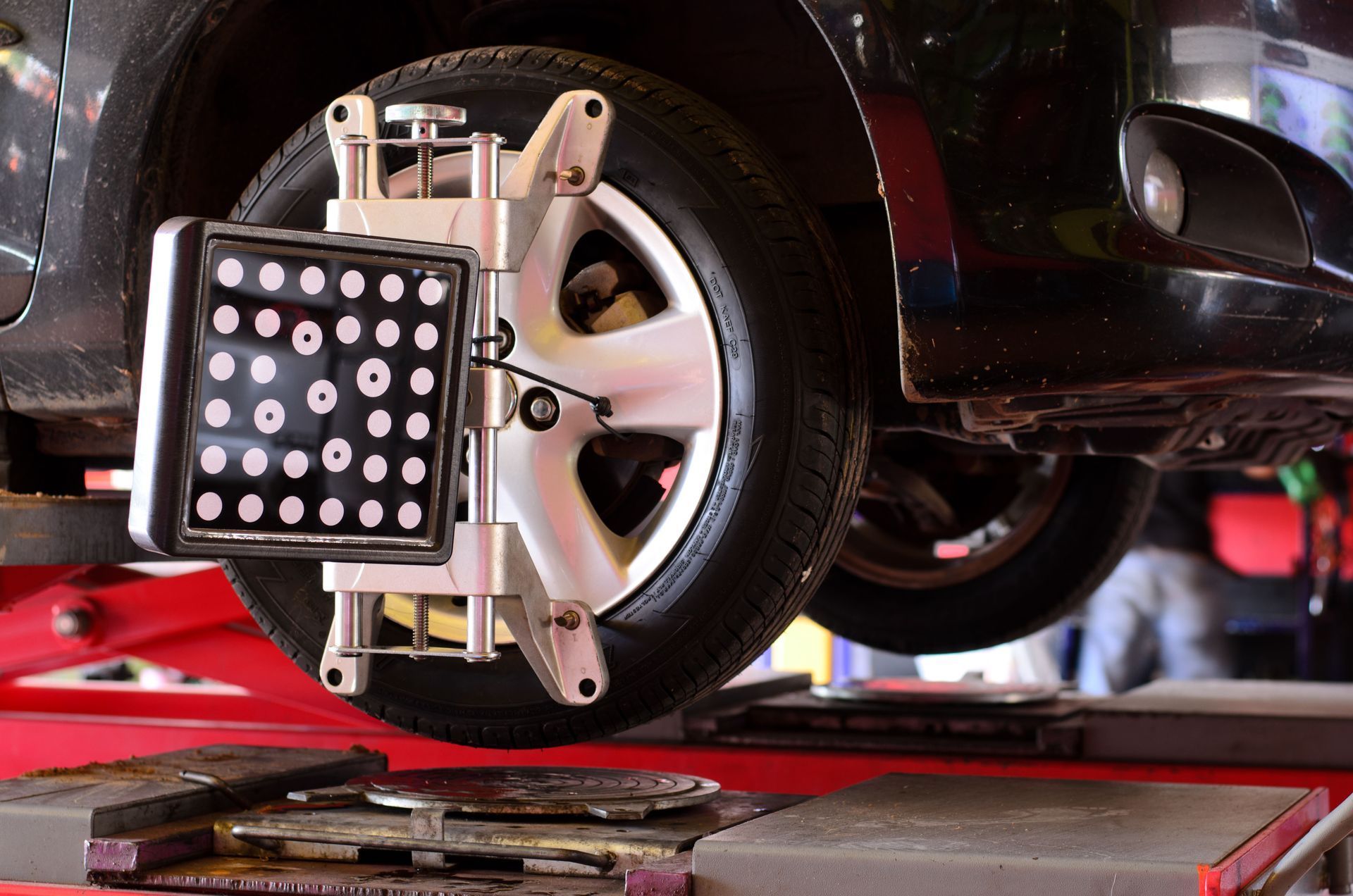
Every driver in Utah knows that our roads can be a bit of a challenge for a vehicle’s suspension system. Between the seasonal temperature swings that create potholes and the adventurous dirt roads leading to our favorite trailheads, your vehicle takes a beating. One of the most critical yet frequently overlooked aspects of vehicle maintenance is ensuring your wheels are pointed in the right direction. While it might seem like a minor adjustment, proper alignment is the foundation of your car’s handling, safety, and tire longevity. At McFarland Automotive, we see firsthand how a small deviation in your wheel angles can lead to expensive repairs down the road. Understanding the subtle hints your vehicle drops can save you money and keep you safer while navigating the streets.
1. Recognizing When Your Steering Wheel Is Off Center
One of the most immediate indicators that your vehicle requires professional attention is a crooked steering wheel. When you're driving straight down a level road, your steering wheel should be perfectly centered, with the emblem sitting level. If you notice that you have to cock the wheel slightly to the left or right just to keep the car in its lane, your car alignment is likely out of spec. This happens because the suspension components have shifted, forcing the steering system to compensate for wheels that are no longer parallel. It might start as a barely perceptible tilt, but over time, this misalignment can worsen and lead to significant driver fatigue. Constantly fighting the wheel to maintain a straight line isn't just an annoyance; it's a sign that your vehicle's geometry is working against you.
2. Noticing When Your Vehicle Pulls To One Side
A classic symptom of alignment issues is a persistent pull toward the shoulder or the center line. You can test this by safely and briefly loosening your grip on the wheel while driving at a constant speed on a flat, deserted road. If the car immediately veers in one direction, you're dealing with a clear case of uneven tire angles. This pulling often occurs because the camber or toe settings are mismatched between the left and right sides. It makes your daily commute much more taxing as you're perpetually applying pressure to keep the car centered. Beyond the physical strain, this constant pulling indicates that your tires are scrubbing against the road surface rather than rolling smoothly, which significantly increases friction and heat.
3. Identifying When Your Tires Show Uneven Wear
Your tires act as a diagnostic map for your vehicle's health, and their wear patterns tell a detailed story. If you inspect your tread and notice that the inside or outside edges are wearing down faster than the rest of the tire, your car alignment is definitely the culprit. This type of accelerated wear is often called "cupping" or "feathering," and it essentially means you're throwing money away by shortening the lifespan of your expensive rubber. When the wheels aren't aligned, the weight of the vehicle isn't distributed evenly across the tire’s contact patch. This causes certain sections of the tread to bear the brunt of the friction, leading to premature bald spots. If you catch this early enough, a professional adjustment can save the remaining tread, but waiting too long will necessitate a full tire replacement.
4. Detecting When Your Steering Feels Loose Or Sloppy
The way your car communicates through your hands is vital for a safe driving experience. If you turn the wheel and feel a certain amount of "play" or looseness before the car actually begins to react, you might be experiencing an alignment issue. A well-aligned vehicle should feel crisp and responsive, providing immediate feedback from the road. When the alignment is off, the steering can feel vague or disconnected, making it difficult to judge exactly how much input is needed for a turn. This lack of precision is particularly dangerous during emergency maneuvers or when driving in heavy Utah snow. Restoring the proper car alignment ensures that the mechanical link between your steering wheel and the road is as tight and reliable as the manufacturer intended.
5. Observing When Your Steering Wheel Vibrates Frequently
While vibrations can sometimes be attributed to unbalanced tires or warped brake rotors, they're also a common red flag for alignment problems. If you feel a shimmy or a shake through the steering wheel while traveling at highway speeds, it's often because the wheels are essentially fighting each other. This conflict creates a harmonic vibration that travels up the steering column and into your hands. This sensation isn't only distracting but also indicates that your suspension is under unnecessary stress. Ignoring these vibrations can lead to the premature failure of bushings, ball joints, and tie rods. According to Firestone, it's recommended to get an alignment check every six months or every 6,000 miles, which is a great rule of thumb to prevent these vibrations from becoming permanent mechanical damage.
6. Hearing When Your Tires Squeal During Normal Turns
You might expect your tires to chirp if you take a corner like a race car driver, but hearing them squeal during low-speed, routine turns is a major warning sign. This high-pitched sound occurs when the tires are being dragged across the pavement at an angle they weren't designed for. Effectively, the rubber is sliding sideways as it tries to move forward, creating audible friction. This is a common symptom when the "toe" setting of your car alignment is incorrect. Not only is the noise embarrassing as you pull into a parking lot, but it serves as a loud reminder that your tires are being sanded down by the asphalt. Getting this addressed promptly will silence the squealing and ensure that your tires are rolling efficiently and quietly once again.
7. Understanding Why Regular Maintenance Is Essential For Safety
Maintaining the correct car alignment is about much more than just a smooth ride; it's a fundamental safety requirement for any responsible vehicle owner. When your wheels are properly aligned, your car tracks straight, responds predictably to steering inputs, and maintains maximum contact with the road. This is especially crucial during inclement weather or when you need to brake suddenly. An unaligned vehicle can behave unpredictably under heavy braking, potentially pulling you into another lane or off the road entirely. By staying on top of your maintenance schedule, you ensure that your car remains a reliable tool for your family’s transportation needs. It's much easier and cheaper to perform a routine check than it is to deal with the fallout of a preventable mechanical failure or a collision caused by poor handling.
Keeping your car in peak condition requires a proactive approach to maintenance, and staying vigilant about your car alignment is one of the best things you can do for your vehicle. By paying attention to how your car steers, feels, and sounds, you can catch minor issues before they transform into major headaches. Whether you've noticed a slight pull to the right or you simply haven't had your suspension checked in a few seasons, taking action now will pay dividends in the form of better fuel economy and a safer driving experience. Our team is dedicated to providing the North Salt Lake community with honest, expert service to keep every journey smooth. If you've noticed any of these warning signs, reach out to the experts at McFarland Automotive for a professional car alignment.